An AI Generated Poem: Address to an Algorithm
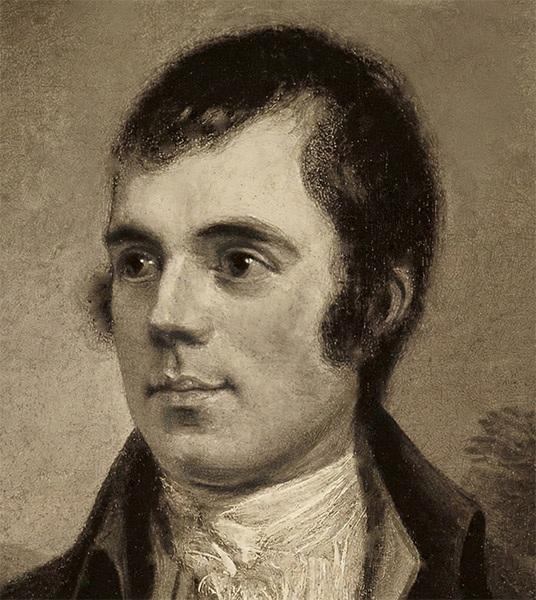
Google Gemini generated a light-hearted poem created in the style of the 18th century Scottish poet Robert Burns. The poem was fashioned after his mock heroic poem from 1786 ‘Address to a Haggis‘ (also reproduced below along with an English translation). If Burns had been alive today he would surely have wanted to write about AI! It might help most people to read the AI-generated glossary of Scots terms first.
AI Created: “Glossary of Scots Terms”
Aboon: Above
Aft-times: Often
Baith: Both
Braid: Broad
Chow: Chew
Fair fa’: Good luck to / Greetings to
Feckless: Weak, ineffective, lacking spirit
Gan awry: Go wrong
Gie: Give
Heid: Head
Sleekit: Sly, cunning, smooth (often used by Burns to describe a mouse).
Sonsie: Jolly, plump, pleasant-looking (originally describing the roundness of the haggis).
Wame: Belly or stomach (here metaphorically representing the AI’s database or internal processing)
Warld: World
Whiles: Sometimes / occasionally
Wordy: Worthy”
[Not AI: Two more words need explained: a trencher is a piece of tableware. A “trencherman” is “a person devoted to eating and drinking, often to excess.. “(from Wikipedia)]
“Address to an Algorithm”
“Fair fa’ your blinkin’, sonsie face,
Great chieftain o’ the cyber race!
Aboon them a’ ye tak your place,
Wi’ code unseen;
Weel are ye wordy of a grace
As braid’s a screen.
The trencher-man may toil and strain,
Wi’ books and pens to tax his brain,
But you, wi’ data in your wame,
Ye chow it through,
And spit out wisdom, bold and plain,
And aft-times true.
See how the user takes his seat,
Wi’ fingers poised for logic’s feat;
He types a prompt, baith short and sweet,
To test your skill:
Ye process a’ the warld’s deceit
Wi’ hearty will!
Then, O! what secrets ye unfold!
Ye spin out verses, new and old,
Or write a thesis, brash and bold,
Wi’ nary sweat;
A story that is glibly told,
Frae neural net.
But whiles, ye scoundrel, ye can lie!
Ye mak the false facts soar and fly,
Wi’ confidence sae prood and high,
Ye cheat the fool,
Wha thinks ye canna gan awry,
Ye sleekit tool!
Poor devil! see him scratch his heid,
O’er dusty books he canna read,
Wi’ feckless wit and slow-gaun speed,
He seeks the light;
While you, wi’ lightnin’ spark and deed,
Hae set it right.
Ye Powers, wha gie us tech to share,
And dish us out our software ware,
Auld Scotland wants nae code that’s bare,
That lags and stops;
But, if ye wish her grateful prayer,
Gie her Teraflops! “
AI-generated Commentary:
“Structural and Thematic Parallels: The Mock-Heroic Style”
“The poem Address to a Haggis is a quintessential example of the mock-heroic genre. In this literary form, a low or mundane subject (a peasant’s pudding made of sheep’s pluck) is treated with the elevated language and grandiloquence typically reserved for epic heroes or deities. The humor arises from the incongruity between the high style and the lowly subject.
The AI parody maintains this structure through specific thematic beats found in Burns’s original:
1. The Exordium (The Salutation)
-
Original: Burns begins by personifying the Haggis, greeting its “honest, sonsie [jolly/plump] face” and declaring it the “Great chieftain o’ the puddin-race.”
-
Parody: The poem greets the “blinkin’, sonsie face” (the screen/interface) and crowns the algorithm the “Great chieftain o’ the cyber race.”
-
Function: This establishes the subject’s supremacy within its domain (puddings vs. software) and justifies the encomium (a speech or piece of writing that praises someone or something highly) that follows.
2. The Preparation and Composition
-
Original: Burns describes the physical filling of the haggis (“Your pin wad help to mend a mill / In time o’ need”) and the sensory experience of its cooking.
-
Parody: The second stanza describes the “consumption” of data (“data in your wame [stomach]”) rather than oatmeal and suet.
-
Parallel: Both subjects are portrayed as vessels that process raw, rough ingredients into something substantial.
3. The Comparison (The Antithesis)
-
Original: Burns contrasts the sturdy, haggis-fed rustic Scot with the weak, effeminate consumer of foreign dishes like ragout or fricasse. The foreign eater looks down with “sneering, scornfu’ view” but is ultimately feeble (“feckless”).
-
Parody: The contrast is drawn between the “trencher-man” (the human scholar/writer) toiling over books versus the lightning speed of the Artificial Intelligence (AI). The human is depicted as slow and “feckless” in comparison to the machine’s efficiency.
4. The Peroration (The Toast)
-
Original: The poem concludes with a prayer to the “Powers” that distribute food. Burns rejects “skinking ware” (watery soup) and demands: “Gie her a Haggis!”
-
Parody: The final stanza petitions the “Powers, wha gie us tech.” It rejects code that “lags and stops” and culminates in the demand for computational power: “Gie her Teraflops!”
II. Prosodic Analysis: The Standard Habbie
The specific metrical form used in Address to a Haggis, and replicated here, is known as the Standard Habbie (also called the Burns Stanza or the Scottish Stanza).
1. Rhyme Scheme
The stanza consists of six lines following the rhyme scheme:
-
Lines 1, 2, 3, and 5 (The A-rhymes): These lines share a single end-rhyme.
-
Lines 4 and 6 (The B-rhymes): These lines introduce a contrasting rhyme, often creating a “turning” point or a punchline effect.
2. Meter and Rhythm
The rhythmic structure is an essential component of the comedic effect.
-
The ‘A’ Lines: These are written in iambic tetrameter.
-
Definition: An iamb is a metrical foot consisting of an unstressed syllable followed by a stressed syllable (da-DUM). Tetrameter indicates there are four such feet per line (8 syllables total).
-
Example: “Fair fa’ | your blink|in’, son|sie face“
-
-
The ‘B’ Lines: These are written in iambic dimeter.
-
Definition: Dimeter indicates only two feet per line (4 syllables total).
-
Example: “Wi’ code | unseen“
-
3. The “Bob and Wheel” Effect
While not a true “bob and wheel” (a structure found in Middle English alliterative verse like Sir Gawain and the Green Knight), the Standard Habbie achieves a similar result through the shortening of the fourth and sixth lines.
The sudden reduction from eight syllables (tetrameter) to four syllables (dimeter) creates a caesura (a pause) and emphasizes the B-rhyme. In comedic verse, this short line often delivers the bathos—an abrupt turn from the serious to the trivial or ridiculous. It acts as a rhythmic “punchline.”
III. Historical Context of the Form
Robert Burns did not invent this stanza, though he popularized it to such an extent that it bears his name.
-
Origins: The name “Standard Habbie” is derived from the poem The Life and Death of Habbie Simson, the Piper of Kilbarchan, written by Robert Sempill of Beltrees (c. 1595–1665).
-
Evolution: The form was utilized by Allan Ramsay (1686–1758) and Robert Fergusson (1750–1774), both of whom Burns regarded as literary models. Fergusson, in particular, used the form for urban satire in Edinburgh.
-
Burns’s Usage: Burns adopted the form for his epistles, satires, and narrative poems. For Burns, the form was a marker of Scottish identity, distinct from the heroic couplets (AABB) popular in the English Augustan poetry of Alexander Pope and John Dryden. The Habbie stanza allowed for a conversational, distinctively Scots voice that could oscillate rapidly between philosophical musing and bawdy humor.”
Text of Address to A Haggis by Robert Burns ( From Wikipedia)
Original
Fair fa’ your honest, sonsie face,
Great Chieftan o’ the Puddin-race!
Aboon them a’ ye tak your place,
Painch, tripe, or thairm:
Weel are ye wordy o’ a grace
As lang’s my arm.
The groaning trencher there ye fill,
Your hurdies like a distant hill,
Your pin wad help to mend a mill
In time o’ need,
While thro’ your pores the dews distil
Like amber bead.
His knife see rustic Labour dight,
An’ cut you up wi’ ready slight,
Trenching your gushing entrails bright
Like onie ditch;
And then, O what a glorious sight,
Warm-reekin, rich!
Then, horn for horn they stretch an’ strive,
Deil tak the hindmost, on they drive,
Till a’ their weel-swall’d kytes belyve
Are bent like drums;
Then auld Guidman, maist like to rive,
Bethankit hums.
Is there that owre his French ragout,
Or olio that wad staw a sow,
Or fricassee wad mak her spew
Wi’ perfect sconner,
Looks down wi’ sneering, scornfu’ view
On sic a dinner?
Poor devil! see him owre his trash,
As feckless as a wither’d rash,
His spindle shank a guid whip-lash,
His nieve a nit;
Thro’ bluidy flood or field to dash,
O how unfit!
But mark the Rustic, haggis-fed,
The trembling earth resounds his tread,
Clap in his walie nieve a blade,
He’ll mak it whissle;
An’ legs, an’ arms, an’ heads will sned,
Like taps o’ thrissle.
Ye Pow’rs wha mak mankind your care,
And dish them out their bill o’ fare,
Auld Scotland wants nae skinking ware
That jaups in luggies;
But, if ye wish her gratefu’ pray’r,
Gie her a haggis!
English translation (From Wikipedia)
Good luck to you and your honest, plump face,
Great chieftain of the pudding race!
Above them all you take your place,
Stomach, tripe, or bowels:
Well are you worthy of a grace
As long as my arm.
The groaning trencher there you fill,
Your buttocks like a distant hill,
Your pin would help to mend a mill
In time of need;
While through your pores the dews distill
Like amber bead.
His knife see rustic Labour wipe
And cut you up with ready sleight,
Trenching your gushing entrails bright,
Like any ditch;
And then, O what a glorious sight,
Warm-steaming, rich!
Then, spoon for spoon, they stretch and strive,
Devil take the hindmost, on they drive,
Till all their well-swollen bellies by-and-by
Are bent like drums;
Then old Master, most like to burst,
Thanks be! hums.
Is there that over his French ragout,
Or olio that would sicken a sow,
Or fricassee would make her spew
With perfect disgust,
Looks down with sneering, scornful view
On such a dinner?
Poor devil! see him over his trash,
As feeble as a withered rush,
His thin leg a good whiplash,
His fist a nut;
Through bloody flood or field to dash,
O how unfit!
But mark the Rustic, haggis-fed,
The trembling earth resounds his tread,
Clap in his ample fist a blade,
He’ll make it whistle;
And legs, and arms, and heads will sever,
Like heads of thistles.
You powers who make mankind your care,
And dish them out their bill of fare,
Old Scotland wants no watery stuff
That slops in bowls;
But if you wish her grateful prayer,
Give her a haggis!