The Old Smoker Blues
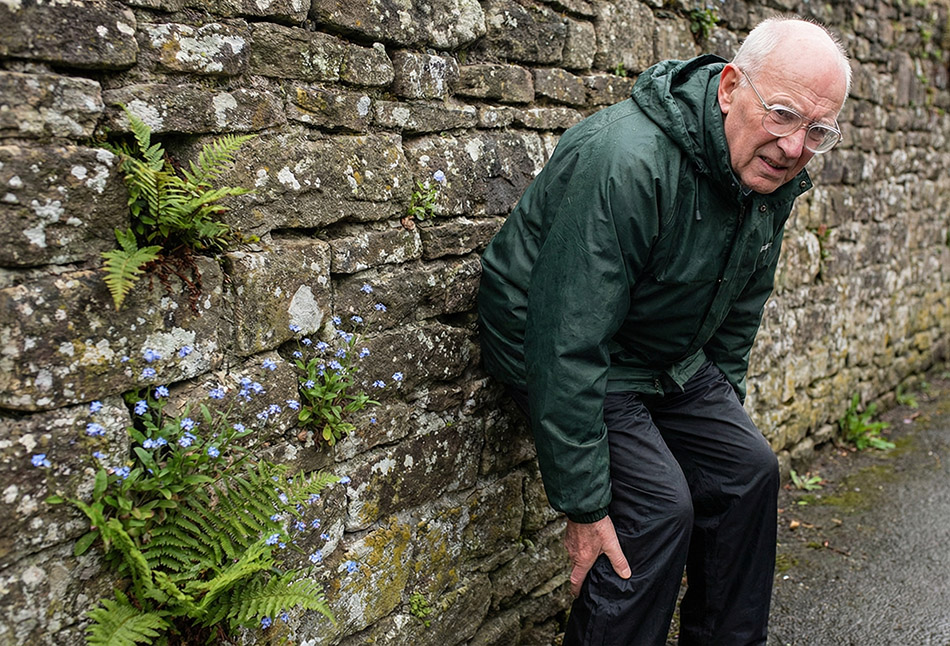
A protest song against tobacco in all its hideous forms and the pain, suffering and death that its habitual use can bring. The initial lyrics were generated by Google Gemini AI. The image was generated by text prompting of Nano Banana Pro 3. The music was created using Suno and a range of musical prompts and a long series of lyric and form changes by me. The topic of the song is pertinent for me, as I have a friend affected by peripheral artery disease due to smoking. I have gone beyond his present level of suffering to explain just one of the severely debilitating effects that chronic high-volume smoking can produce in some people. If this song can reduce the chances of just one young person suffering from the effects of tobacco smoking, it will have served its purpose.
Lyrics
Well he has got the old leg artery blues every day and night
Well he has got the old leg artery blues every day and night
He is fine in himself but his walkin’ is a blight
Well he has got the old leg artery blues every day and night
Old John was a smoker, burnin’ bacco night and day.
Yes, Old John was a smoker, burnin’ tobacco night and day.
He never worried ‘bout his heart, until the price he had to pay.
Yes, Old John was a smoker, burnin’ tobacco night and day.
He used to hike the hills, where the air is crisp and dry
He used to hike the hills, where the air is crisp and dry
The vessels are hardening and he shuffles with a sigh.
He used to hike the hills, where the air is crisp and dry
Old John walks in the mornin’, every single day.
Old John walks in the mornin’, every single day.
Hardly makes it past the gate, in pain straight away.
Old John walks in the mornin’, every single day.
They talk about the blockage, bringing him to his knees.
They talk about the blockage, bringing him to his knees.
It’s the stiffening of the arteries, a worsening in disease.
They talk about the blockage, bringing him to his knees.
He tries to push the distance, but the cramp begins to bite.
He tries to push the distance, but the cramp begins to bite.
He’s got peripheral artery blues, that he just has to fight
He tries to push the distance, but the cramp begins to bite.
Don’t be a smoker babe if you want to roam.
Just don’t be a smoker babe if you want to roam.
Else you’ll end up livin’ in your ground floor only home.
Just don’t be a smoker babe if you want to roam ….
Just don’t be a smoker babe if you want to roam.
Keep on Roaming.
(Edited) Explication of the Lyrics by Quotation From Two AI Reports
A Story of Suffering
“The lyrics narrate the decline of “Old John,” a former smoker and hiker, who now suffers from the classic symptoms of intermittent claudication: exertional pain, reduced walking distance, and the eventual restriction of his life-world. In a medical context, the “old leg artery blues” is a colloquialism for Peripheral Artery Disease (PAD), specifically symptomatic atherosclerosis of the lower extremities. The use of the term “blues” is multivalent. Clinically, it may subtly reference cyanosis—the bluish discoloration of the skin that occurs in advanced stages of ischemia when blood flow is critically reduced. When a limb is starved of oxygen, deoxygenated hemoglobin creates a blue or purple cast, a visual marker of the “blues” that Old John carries in his flesh.”
A Chronic Condition
“The temporal marker “every day and night” indicates the chronicity of the condition. PAD is not an episodic ailment like the flu; it is a permanent alteration of the vascular architecture. The mention of “night” is particularly clinically significant. While early PAD manifests as pain during walking (claudication), the progression to rest pain—pain that occurs when lying down, often requiring the patient to dangle their leg over the bed to aid gravity-assisted blood flow—is a sign of Critical Limb Ischemia (CLI). Thus, the lyric “every day and night” suggests Old John is in a transition phase, where the disease haunts him even in repose.
The second line of the first verse introduces a crucial phenomenological distinction: “He is fine in himself but his walkin’ is a blight” This line perfectly captures the specific cruelty of intermittent claudication. Unlike systemic illnesses such as influenza or metastatic cancer, which may cause generalized malaise, fever, or wasting, PAD is a focal disease. The patient often feels “fine in himself”—his heart rate at rest may be normal, his mind clear, his upper body functional. However, the mechanism of ambulation is compromised. This duality—the healthy mind trapped in a failing chassis—is a core theme of the “blues” genre, which often deals with the limitations of the human condition.”
‘The Blockage’
“The “blockage” is the lay term for arterial stenosis or occlusion. In Old John’s case, this is likely located in the superficial femoral artery or the popliteal artery, the most common sites for claudication symptoms. The “talk” likely refers to the discourse of medical professionals—vascular surgeons and sonographers—who visualize these blockages using Doppler ultrasound or angiography. The second verse provides the etiological backstory, moving the song from a description of symptoms to an investigation of cause: Old John was a smoker, burnin’ bacco night and day. / He never worried ‘bout his heart, until the price he had to pay.” This verse establishes the direct, incontrovertible causal link between tobacco use and vascular pathology. Research confirms that cigarette smoking is the single most potent risk factor for the development of PAD. The combustion of tobacco releases thousands of chemicals, including nicotine and carbon monoxide, which launch a multi-pronged attack on the vascular system.The phrase “burnin’ bacco night and day” emphasizes the intensity of the addiction. This mirrors the “chain smoker” profile, where the sustained exposure to toxins prevents the endothelium (the inner lining of the blood vessels) from repairing itself. The “burning” of the tobacco parallels the “burning” pain of ischemia—one fire ignites the other”
‘Hardening’
“Verse 3 mentions “The vessels are hardening and he shuffles with a sigh.” “Hardening” refers to arteriosclerosis (hardening of the endothelial Injury: Toxins from the “burnin’ bacco” strip away the protective endothelial layer of the arteries. The body responds to this injury with inflammation and cholesterol and calcium deposit at the injury sites. Over years (“night and day”), these deposits grow and calcify. The elastic artery becomes a rigid pipe. It can no longer expand to accommodate increased blood flow during exercise. This “stiffening” is what transforms the “hike” into a “shuffle.” The artery is no longer a dynamic organ but a calcified relic.”
A Pathophysiological Note:The stiffening of the arteries.
“As we age, or due to hypertension and smoking, the elastin fibers in the tunica media (middle muscle layer) degrade and are replaced by collagen, or undergo calcification. This reduces arterial compliance.Compliance in a biological vessel is analogous to capacitance in an electrical circuit. It describes the vessel’s ability to distend in response to pressure of the heart beat.”
The Heavy Price of Tobacco Smoking
“The lyrics speak of “the price he had to pay.” In the blues tradition, the “price” is often a spiritual debt or a consequence of sin (e.g., Robert Johnson selling his soul). Here, the price is physiological and functional. Old John did not worry about his “heart”—a metonym for the entire cardiovascular system—because the damage was silent. Atherosclerosis is asymptomatic for decades until the lumen of the vessel is critically narrowed (often >70%). The song deconstructs the myth of the invincible male body. The “Old John” of the 21st century is not a martyr of labor but a victim of lifestyle. The “Old Leg Artery Blues” utilizes the imagery of incarceration without a literal prison. Old John is imprisoned by his “gate” (Verse 4) and his “ground floor” (Verse 7). His own arteries act as the bars of his cell. The “claudication distance”—the maximum distance he can walk before pain stops him—defines the perimeter of his yard. He is a prisoner of his own pathology, serving a life sentence for the “crime” of smoking. The “hill” is a potent symbol in folk music … that represents obstacle, perspective, and vitality. Hiking requires sustained aerobic output and patent arteries. The “crisp and dry” air suggests high altitude, purity, and health—a sharp contrast to the smoke-filled lungs of his past (“burning bacco”). This memory serves as the baseline for his disability. The “pre-illness self” is often idealized. Old John remembers himself as a conqueror of terrain. This makes the current reality of the “shuffle” even more devastating. The loss is not just physical; it is a loss of the identity of the hiker.
“The vessels are hardening and he shuffles with a sigh.” The “shuffle” is a specific gait adaptation. In PAD, patients often adopt a gait that minimizes metabolic cost. They take shorter steps, decrease walking speed, and spend more time in the double-support phase of the gait cycle. This is a protective mechanism to delay the onset of ischemia. The “sigh” is the auditory signature of chronic suffering. Snippet discusses the “emotional burden” and “struggling for relief.” The sigh is a non-verbal communication of exhaustion. It is the sound of a man who knows the hill is now impossible
Verse 4 describes the daily failure: “Hardly makes it past the gate, in pain straight away.” The “gate” marks the boundary between the domestic sphere (safety/stasis) and the public sphere (risk/movement). For a healthy person, the gate is an exit; for Old John, it is a barrier. The immediacy of the pain (“straight away”) indicates the severity of his stenosis. Clinically, this suggests a very short pain-free walking distance (PFWD). This spatial restriction creates a “shrinking world.” As the arteries narrow, the geography of the patient’s life contracts. First the mountains are lost, then the neighborhood, and finally, he cannot even breach the perimeter of his own property. He is under house arrest, enforced by ischemia.
Verse 6 vividly describes the sensation: “He tries to push the distance, but the cramp begins to bite.” The lyrics use the word “cramp,” but the clinical term is intermittent claudication (from the Latin claudicare, “to limp”). The mechanism is a supply-demand mismatch. Walking activates the calf muscles (gastrocnemius/soleus), increasing their oxygen consumption by 10-15 fold. The “blockage” (atherosclerotic plaque) acts as a fixed resistor. It limits blood flow velocity and volume. When demand exceeds supply, the muscles switch to anaerobic metabolism. The “Bite”: Anaerobic metabolism produces lactate, hydrogen ions, and other metabolites (adenosine, potassium). These accumulate in the tissue and stimulate Type III and IV afferent nerve fibers, sending distinct pain signals to the brain. The word “bite” is particularly effective. It personifies the pain. It suggests an animalistic attack, aligning with blues imagery of wolves or hellhounds (“Hellhound on my Trail”). The pain is not passive; it is an active aggressor that “bites” him whenever he tries to escape (move)
The “fight” is literal: the gold standard conservative treatment for PAD is supervised exercise therapy. Patients are instructed to walk into the pain—to “push the distance” as the lyrics say—to stimulate angiogenesis (the growth of new collateral blood vessels). This requires immense willpower. Old John must voluntarily submit to the “bite” every day in the hope of future relief. It is a grueling, painful fight against his own anatomy.
In “The Old Leg Artery Blues,” “roaming” is the ultimate good. It represents autonomy, virility, and the capacity for experience. The disease is framed as the end of roaming. The “ground floor only home” is the anti-roam.”
The Socio-political Context of Roaming in Scotland
“The reference to roaming is not American; it is distinctly Scottish, representing a specific socio-political trajectory that culminates in the ‘Right to Roam’ established by the Holyrood Parliament through the Land Reform (Scotland) Act 2003. The statutory right, codified after centuries of struggle against the enclosure of the Highlands and the exclusionary practices of landed estates. There is divergence between Scottish and English law, contrasting the “Right to Roam” with the “Right to Exclude. The Land Reform (Scotland) Act 2003 (LRSA) was passed on 23 January 2003 and became effective from 9 February 2005. The LRSA is the statutory bedrock of the modern right to roam. It fundamentally shifted the legal presumption: whereas previously access was a tolerance, it became a statutory right.”
Conclusion: The Lyrical Warning as Public Health Intervention
“The Old Leg Artery Blues is a sophisticated piece of medical ethnomusicology. It translates the sterile data of vascular surgery—ABI indices, occlusion rates, endothelial dysfunction—into the visceral language of the blues. Through the archetype of Old John, the song achieves several communicative goals. It clearly links cause (smoking) and effect (hardening/blockage). Through words like “bite” and “cramp,” it allows the healthy listener to simulate the pain of the sufferer. It leverages the fear of immobility (“ground floor only”) rather than the fear of death to motivate behavioural change.”